

3 Signs Your Ink Cup Ring Needs to Be Replaced

A perfect result in pad printing depends on many factors, but few are as crucial as the condition of the ink cup ring. This small precision part is responsible for cleanly and evenly scraping excess ink from the printing plate (the cliché). A worn or damaged ring inevitably leads to quality problems, increased scrap, and in the worst case, costly production stoppomości.
But how can you tell it's time for a replacement? In this post, we'll show you three clear signs to look out for.
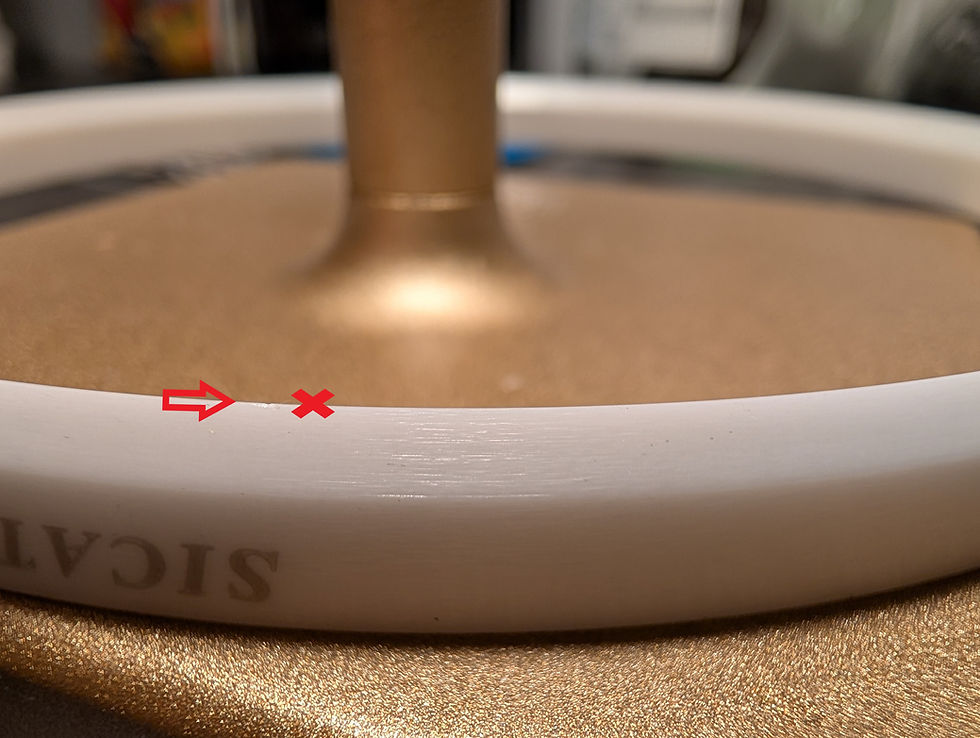
1. Visible Damage on the Doctoring Edge
The most obvious sign is visible damage to the ring's working edge. Take the ring and carefully inspect the sharp edge, preferably under good light and possibly with a magnifying glass. Look for:
Chips and Nicks: Even tiny chips, barely visible to the naked eye, will leave fine ink streaks in the print.
Cracks: Hairline cracks, especially in ceramic rings, are a clear warning sign. A crack can enlarge at any time, leading to a complete fracture of the ring during production.
Signs of Wear: A once-sharp, precise edge that now appears rounded or uneven will no longer be able to wipe the ink away cleanly.
2. Declining Print Quality
Often, the print itself is the best indicator of a worn ring. If you notice any of the following problems, the ink cup ring is the prime suspect:
Streaking: Fine, line-shaped streaks in the print are a classic symptom of a damaged doctoring edge.
Hazing or Fogging: If the ring no longer cleanly wipes the ink from the plate, a very thin film of ink remains on the non-printing areas. This is picked up by the pad and creates an unwanted "haze" around the printed image.
Incomplete Ink Doctoring: The print appears pale or incomplete because the ring is too worn to "doctor" the cliché correctly, and too much ink is removed.
3. Ink Leaks from the Ink Cup
The ink cup ring also serves as a seal for the closed ink cup. If the ring is worn, it can no longer seal the ink cup cleanly against the cliché.
The result is ink leakage at the edges of the ink cup. This not only leads to a messy work environment and increased cleaning effort but also to the unnecessary waste of expensive printing ink.
Conclusion: Act Before the Downtime Comes
The regular inspection of your ink cup rings is a small effort that can save you from major problems. A timely replacement is not an expense, but an investment in the quality of your products and the efficiency of your production.


Comments